• High-Performance Conductive Adhesives Unlock the Potential of GaN, SiC, and EV Modules

    High-Performance Conductive Adhesives Unlock the Potential of GaN, SiC, and EV Modules

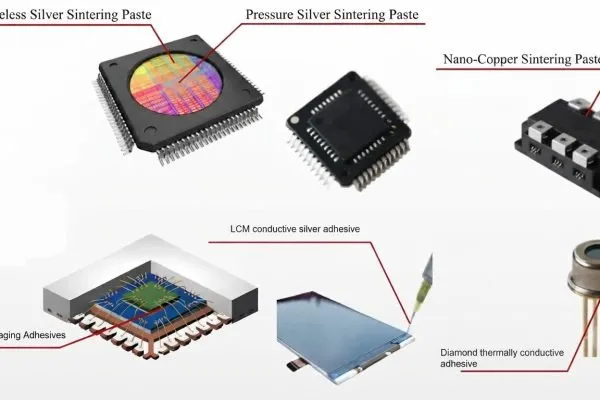
    I. Power Semiconductor Upgrades Drive Encapsulation Material Innovation With the rapid adoption of third-generation semiconductors (SiC, GaN), high-power IGBT modules, and automotive-grade power devices, operating current densities and junction temperatures of chips are continuously rising. Traditional tin-based solders (e.g., AuSn, SAC) are increasingly reaching their limits in terms of thermal conductivity, high-temperature reliability, and resistance

  • A Material Platform Built to Print, Stretch, and Shield: Inside ChemWhat’s Conductive Paste for Circuit and Shielding Portfolio

    A Material Platform Built to Print, Stretch, and Shield: Inside ChemWhat’s Conductive Paste for Circuit and Shielding Portfolio

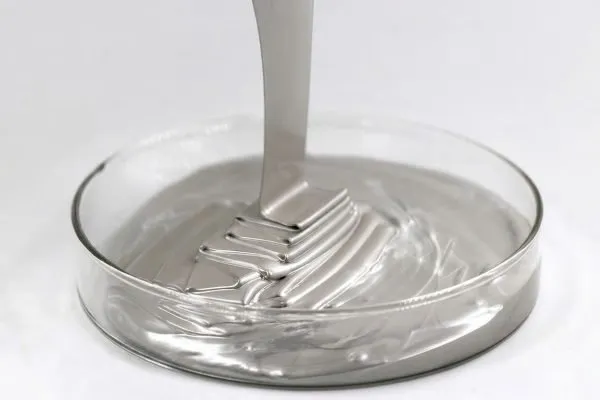
    Why Printed Conductive Materials Matter Now Smartphone antennas, automotive defrosting circuits on panoramic glass roofs, wearable ECG electrodes, and EMI shielding layers inside telecom base stations all rely on the same underlying category of material: conductive paste that can be printed, sprayed, or molded onto a surface much like ink. As consumer electronics get thinner

  • Why Pure Isn’t Enough: Decoding the Hidden Specs of Biochemicals

    Why Pure Isn’t Enough: Decoding the Hidden Specs of Biochemicals

    In the precise fields of biochemistry and analytical chemistry, researchers often encounter a confounding issue: when using the same compound—such as Phosphoenolpyruvate Monopotassium Salt (PEP-K, ChemWhat®38422) for metabolic research, Phosphoenolpyruvate Monocyclohexylammonium Salt (PEP-CHA, ChemWhat®38345) for studies, or Ferene Disodium Salt (Ferene, ChemWhat®25976) for precision metal ion detection—they find that despite the market being flooded with

  • Cracking the Silver Code: How ChemWhat is Decoupling Electronics from Precious Metal Volatility

    Cracking the Silver Code: How ChemWhat is Decoupling Electronics from Precious Metal Volatility

    The global electronics industry is currently caught in a “silver squeeze.” With silver prices fluctuating at historic highs, sectors ranging from 5G communications to electric vehicles are seeing their margins evaporate. In critical components like conductive pastes and circuit boards, silver can account for over 70% of total material costs. Against this backdrop, ChemWhat, a

  • Manufacturing Revolution Amid Soaring Silver Prices: ChemWhat’s Nanometal Coating Technology Leading Industrial Transformation

    Manufacturing Revolution Amid Soaring Silver Prices: ChemWhat’s Nanometal Coating Technology Leading Industrial Transformation

    As the global clean energy transition accelerates, silver prices as a critical industrial raw material are experiencing unprecedented increases. This trend is not only reshaping the cost structure of global manufacturing but also driving the rapid development of silver substitution technologies. In this wave of transformation, ChemWhat, as a global leader in nanometal technology, is

  • ChemWhat Leading the Metal Nanomaterial Revolution: Pioneering a New Era in Electronic Device Manufacturing

    ChemWhat Leading the Metal Nanomaterial Revolution: Pioneering a New Era in Electronic Device Manufacturing

    Overview In today’s rapidly evolving global electronics industry, traditional materials can no longer meet the demands for high performance, miniaturization, and flexibility in next-generation devices. Metal nanomaterials, with their exceptional electrical, thermal, and functional properties, are redefining the manufacturing standards of electronic devices. ChemWhat, as a technology pioneer in the chemical materials field, has deeply

  • Precision Chemistry in Organic Photovoltaics (OPV) – Unlocking Next-Generation Flexible Power with High Purity and Structural Fidelity

    Precision Chemistry in Organic Photovoltaics (OPV) – Unlocking Next-Generation Flexible Power with High Purity and Structural Fidelity

    Against the backdrop of global acceleration toward carbon neutrality goals, organic photovoltaics (OPV) is transitioning from laboratory to industrial scale, leveraging its unique advantages of lightweight, flexibility, semi-transparency, solution processability, and environmental friendliness. As a premium biochemical database and materials brand under Watson, ChemWhat has focused extensively on core functional materials for organic photovoltaics in

  • ChemWhat®522408: A High-Performance Alternative to 3M Novec™ 7100

    ChemWhat®522408: A High-Performance Alternative to 3M Novec™ 7100

    In the industrial cleaning agents, solvents, and cooling fluids sectors, the global market has long been dominated by international giants such as 3M (e.g., Novec™ 7100), Chemours (Krytox®), and Solvay (Galden®/Fomblin®). These companies have built near-monopolistic market structures through deep technical accumulation and robust patent barriers. Take 3M’s Novec™ 7100 as an example: this engineered

  • ChemWhat: The Global Benchmark in Ultra-High-Purity Rare Earth, Metal Halide, and Chalcogenide Reagents

    ChemWhat: The Global Benchmark in Ultra-High-Purity Rare Earth, Metal Halide, and Chalcogenide Reagents

    As a globally registered trademark of Watson, ChemWhat has established itself as a rising international leader in the field of ultra-high-purity inorganic reagents. Known for its unwavering commitment to quality, ChemWhat has become a trusted brand among researchers and industries worldwide. Its product line—spanning rare earth halides, other metal halides, and metal chalcogenides—has been widely

  • Watson International: A Global Leader in High-Purity PEG Linkers for Antibody-Drug Conjugate (ADC) Innovation

    Watson International: A Global Leader in High-Purity PEG Linkers for Antibody-Drug Conjugate (ADC) Innovation

    In the realm of modern biopharmaceutical innovation, antibody-drug conjugates (ADCs) represent a promising frontier—one that combines the specificity of monoclonal antibodies with the potency of cytotoxic agents. At the core of this technology lies a critical component: the linker, which bridges the antibody and the drug payload. Among the various types of linkers, polyethylene glycol