• ChemWhat Leads the Dental Materials Revolution: Breakthrough Developments in UDMA Alternatives

    ChemWhat Leads the Dental Materials Revolution: Breakthrough Developments in UDMA Alternatives

    In the long evolution of dental material technology, following the three important dental raw materials of 10-MDP (10-Methacryloyloxydecyl dihydrogen phosphate), 4-META (4-Methacryloxyethyl trimellitic anhydride), and Bis-GDMAP (Bis(Glyceryl Dimethacrylate)Phosphate), ChemWhat has achieved another major technological breakthrough by successfully developing a series of high-performance alternatives to UDMA (Urethane Dimethacrylate), bringing revolutionary innovation to the dental materials industry.

  • Precision Chemistry in Organic Photovoltaics (OPV) – Unlocking Next-Generation Flexible Power with High Purity and Structural Fidelity

    Precision Chemistry in Organic Photovoltaics (OPV) – Unlocking Next-Generation Flexible Power with High Purity and Structural Fidelity

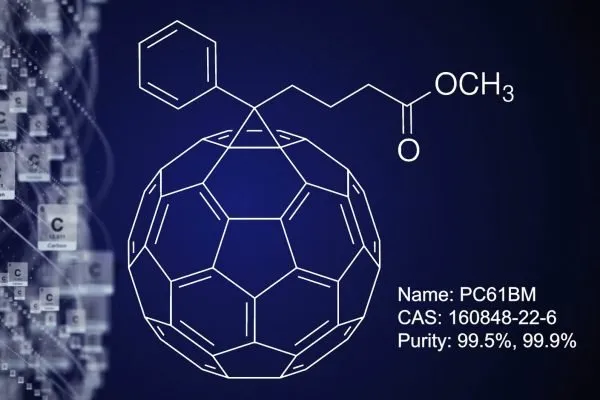
    Against the backdrop of global acceleration toward carbon neutrality goals, organic photovoltaics (OPV) is transitioning from laboratory to industrial scale, leveraging its unique advantages of lightweight, flexibility, semi-transparency, solution processability, and environmental friendliness. As a premium biochemical database and materials brand under Watson, ChemWhat has focused extensively on core functional materials for organic photovoltaics in

  • Empowering Innovation: ChemWhat’s Organic Optoelectronic Ecosystem

    Empowering Innovation: ChemWhat’s Organic Optoelectronic Ecosystem

    Beyond established expertise in inorganic rare earths and perovskite raw materials, ChemWhat has successfully redefined its presence in the field of organic optoelectronics. The company has developed a comprehensive product line that encompasses small molecules, polymers, and fullerene derivatives, currently serving over one hundred research institutions and enterprises around the globe. Core Materials Portfolio ChemWhat’s

  • ChemWhat Sulfo-TAG NHS-Ester: Redefining the International Quality Standard for Immunoassay Labeling Reagents

    ChemWhat Sulfo-TAG NHS-Ester: Redefining the International Quality Standard for Immunoassay Labeling Reagents

    In the continuous evolution of immunoassay and in vitro diagnostic technologies, the reliability and reproducibility of labeling chemistry remain crucial factors influencing analytical performance. Sulfo-TAG NHS-Ester, a well-established and widely used water-soluble NHS ester labeling reagent, has become an indispensable component in high-sensitivity immunodetection systems. Developed and produced on a large scale by ChemWhat, a

  • BCB (Benzocyclobutene): — Watson International Enables the Transition from Concept to Scalable Application

    BCB (Benzocyclobutene): — Watson International Enables the Transition from Concept to Scalable Application

    Benzocyclobutene (BCB) is an organic compound with a rigid molecular structure composed of a conjugated benzene ring and a four-membered ring. Its excellent thermal stability and electrical properties have made it a highly promising candidate for next-generation electronic materials. Historically, its industrial adoption has been constrained by high production costs, complex purification processes, and limited

  • ChemWhat®522408: A High-Performance Alternative to 3M Novec™ 7100

    ChemWhat®522408: A High-Performance Alternative to 3M Novec™ 7100

    In the industrial cleaning agents, solvents, and cooling fluids sectors, the global market has long been dominated by international giants such as 3M (e.g., Novec™ 7100), Chemours (Krytox®), and Solvay (Galden®/Fomblin®). These companies have built near-monopolistic market structures through deep technical accumulation and robust patent barriers. Take 3M’s Novec™ 7100 as an example: this engineered

  • Polyberg delivers high-performance, tailor-made oilfield cementing additives

    Polyberg delivers high-performance, tailor-made oilfield cementing additives

    As global energy exploration continues to advance into deeper, hotter, more saline, and higher-pressure formations, the performance requirements for oilfield cementing additives have become increasingly stringent. In particular, in challenging environments such as the Middle East, Central Asia, North America, and offshore oilfields, cementing additives with excellent fluid loss control, retardation, anti-settling, and environmental adaptability

  • ChemWhat: The Global Benchmark in Ultra-High-Purity Rare Earth, Metal Halide, and Chalcogenide Reagents

    ChemWhat: The Global Benchmark in Ultra-High-Purity Rare Earth, Metal Halide, and Chalcogenide Reagents

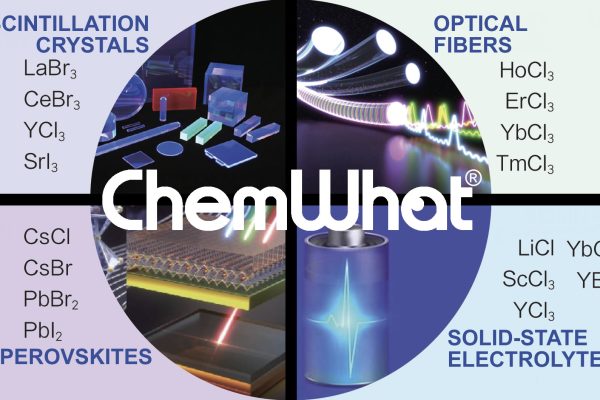
    As a globally registered trademark of Watson, ChemWhat has established itself as a rising international leader in the field of ultra-high-purity inorganic reagents. Known for its unwavering commitment to quality, ChemWhat has become a trusted brand among researchers and industries worldwide. Its product line—spanning rare earth halides, other metal halides, and metal chalcogenides—has been widely

  • Overcoming the “Choke Points” in Semaglutide Side Chain Synthesis with Core Technologies to Enable Efficient GLP-1 Drug Manufacturing

    Overcoming the “Choke Points” in Semaglutide Side Chain Synthesis with Core Technologies to Enable Efficient GLP-1 Drug Manufacturing

    Semaglutide, a groundbreaking product in the GLP-1 drug class, owes its extended half-life and enhanced receptor affinity largely to its unique side chain, Ste-Glu-AEEA-AEEA-OSU (CAS: 1169630-40-3). This side chain covalently modifies the peptide backbone, significantly improving pharmacokinetics and therapeutic performance. However, its complex structure presents two critical synthetic challenges: Leveraging deep expertise in peptide chemistry and

  • Watson International: A Global Leader in High-Purity PEG Linkers for Antibody-Drug Conjugate (ADC) Innovation

    Watson International: A Global Leader in High-Purity PEG Linkers for Antibody-Drug Conjugate (ADC) Innovation

    In the realm of modern biopharmaceutical innovation, antibody-drug conjugates (ADCs) represent a promising frontier—one that combines the specificity of monoclonal antibodies with the potency of cytotoxic agents. At the core of this technology lies a critical component: the linker, which bridges the antibody and the drug payload. Among the various types of linkers, polyethylene glycol